This
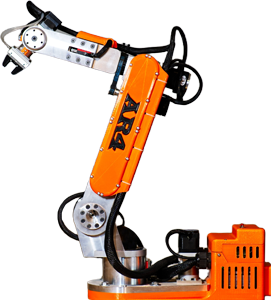
In the heart of the Pacific Northwest, Skagit Valley College is setting a new standard for technical education by integrating the Annin Robotics AR4 Robot into its engineering curriculum. As manufacturing sectors in Washington demand more specialized automation skills, SVC provides students with direct access to the AR4, a professional-grade, 6-axis robot arm designed for both high-level precision and deep educational “under-the-hood” exploration.
In SVC’s Advanced Manufacturing and Design (AAS and BAS) programs, students build, program, and maintain robots. The AR4’s open-source flexibility allows students to master:
Kinematics & Motion Planning: Understanding the complex geometry of a 6-degree-of-freedom (6DOF) system.
Industrial Programming: Gaining proficiency in Python and ROS (Robot Operating System), the languages powering modern industry.
System Integration: Implementing sensors, end-effectors, and vision systems into automated work cells.
Skagit Valley College ensures that its graduates are not just “button-pushers,” but technical experts ready to lead in aerospace, marine technology, and advanced manufacturing.
This
For the MANF 277 Capstone at Skagit Valley College, the focus moves from learning about a robot to using it as a critical component of a production solution. This course represents the transition from student to professional designer.
In this final phase of the program, students operate in a team environment to solve real-world manufacturing challenges. Using the skills developed in previous coursework, teams develop new products or implement significant improvements to the processes within the SVC Production Lab. The course emphasizes the application of computer-aided automation technology to support continuous improvement and efficiency in a production environment.
Students are tasked with developing comprehensive production solutions and the control documentation necessary to manage them. By producing prototypes that meet production standards and applying rigorous diagnostic testing, learners verify both design and process performance. This capstone experience ensures that graduates can not only operate automation hardware but also lead the design and maintenance of integrated manufacturing systems.
The AR4 6-axis robot is uniquely suited for capstone-level projects because it functions as an open platform for innovation rather than a restricted “end-user” tool.
Production Standards: With its ±0.5mm repeatability and 4lb+ payload, the AR4 allows students to prototype genuine pick-and-place, assembly, and testing sequences that mirror industrial standards.
System Design vs. Operation: Because the AR4 is non-proprietary and supports Python and ROS, students can go beyond basic movement to design custom logic that integrates the arm with external sensors and PLC-driven conveyors.
Accessible Internals for Diagnostics: The “white-box” design of the AR4 allows students to apply diagnostic testing to the robot itself, understanding motor feedback and controller data in ways that are often impossible with sealed, proprietary industrial arms.
Rapid Prototyping: The ability to 3D print custom end-effectors or mechanical modifications makes the AR4 the ideal centerpiece for teams looking to develop unique, specialized manufacturing work cells.

This course provides a comprehensive overview of how electronic and mechanical systems drive modern product design and manufacturing. Students utilize electronic principles and test equipment to analyze industrial control systems, learning to integrate digital controls with data processing. The curriculum introduces microcontrollers, robotic principles, and automation systems, with a deep dive into motor and servo-control dynamics.
Unlike proprietary “black-box” industrial robots, the AR4 offers a transparent view of motor controllers and feedback loops in a physical environment. By leveraging its open architecture and support for Python and ROS, students master the complex system integration required to interface robotics with external sensors, PLC systems, and automated conveyors, preparing them for the technical realities of modern industry.
This is the foundational course for robotics at SVC. It provides the initial “hands-on” encounter with robotic systems.
Key Focus: Students are introduced to microcontrollers, automation systems, and robotic motor/servo control.
Skill Development: The course covers programming a robotic work cell to perform specific tasks and designing servo-motor feedback control systems.
Engineering programs, including Skagit Valley College, leverage the AR4 Robot’s accessible internals to teach students exactly how motor controllers and feedback loops operate in a physical 6-axis arm.
Professor/Educator Name: Dr. Anya Sharma
Title/Role: Assistant Professor of Robotics