This


This
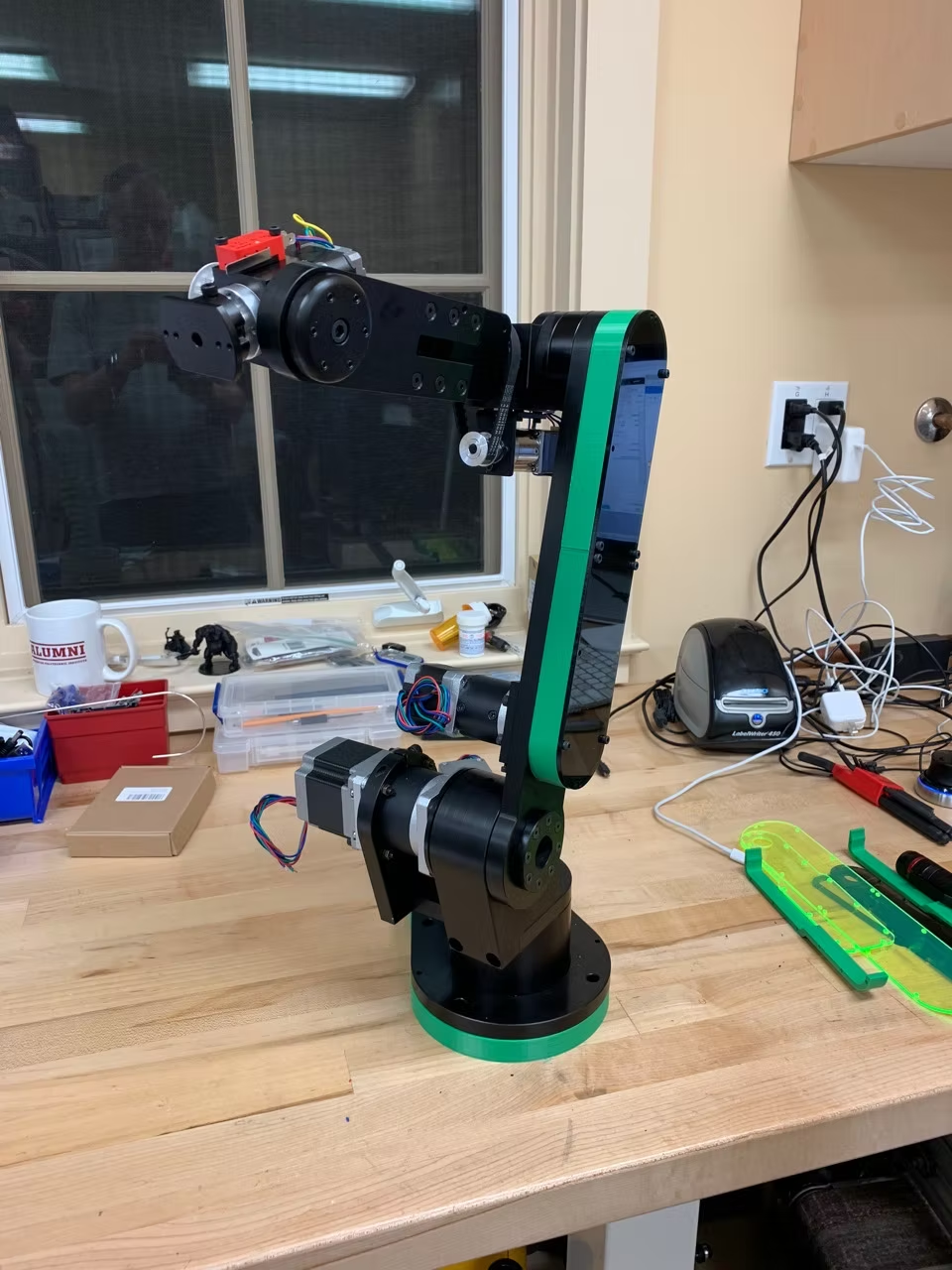
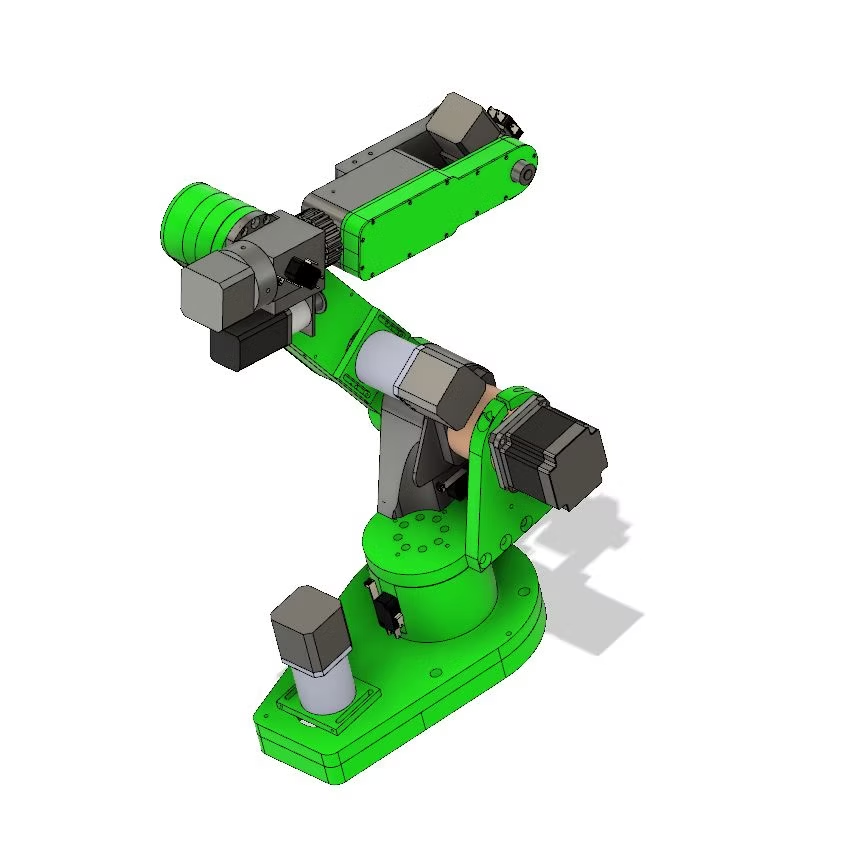
i was inspired by the project and i wanted to build an robot to implement in the factory where i work, but the new manager was not so convinced and i kept working on robot. at first was 3d printed and after i was able to manufacture the robot from aluminium.
This build was part of the European ROBOMINERS project. The challenge was to achieve high-resolution subsurface mapping to guide autonomous drilling robots. The AR4 was used to precisely position and hold an electrical resistivity tomography sensor against a mine wall. This allowed the team to measure electrical resistivity changes at close range, providing detailed data on the boundaries and composition of mineral deposits hidden behind the rock surface.
Learn More: https://robominers.eu/2023/10/25/european-union-funded-mining-robot-achieves-remarkable-success-in-slovenia-field-trials/
The project was born from a vision by Suebpong and the Majortech team to push the limits of mobile robotics. While stationary arms are common, the goal was to give a powerful robot arm true “legs”, or in this case, tracks, to go where the work is. Inspired by the need for versatile automation in Smart Agriculture and the high-stakes demands of Search and Rescue (SAR), they set out to mate the powerful 6-axis AR4 robot by Annin Robotics with the Terrex (TR-80) tank chassis.
The first major hurdle was physics. Mounting a dynamic 6-axis arm onto a moving platform creates a complex dance of forces. The initial prototype, with its 40 kg payload, served as the testbed. The team spent weeks evaluating weight distribution and chassis stability during movement. Watching the TR-80 traverse obstacles and uneven terrain with the AR4 mounted proved the chassis could provide the rugged mobility required.
Goal: Replace manual part handling with automated systems for efficiency/consistency.
Challenges: Retrofitting old drilling machine with Arduino-controlled pneumatics.
Results:
CNC machine: Reliable 15-minute cycles over 3 months.
Drilling machine: 40-second cycles with zero downtime in first week.
Long-Term Testing: Monitoring performance under 8-hour daily operation.
This AR4-based “HandyBot” understands voice commands to autonomously pick/place tabletop objects using cutting-edge AI vision (Grounding DINO, Segment Anything) and OpenAI Whisper speech recognition. The $2300 system combines an AR4 arm, RealSense D435 camera, and custom ROS 2 pipeline for real-world object interaction.
🔗 Build it yourself: GitHub Repo
💬 Discuss the ROS driver: Community Thread
The AR4 robotic arm system received significant motion control upgrades. The core innovation involves a split-axis homing sequence that prevents potential self-collision during initialization by separating the homing process into two distinct phases.
Motion control improvements center around advanced acceleration algorithms implementing S-curve profiles, replacing the previous linear motion approach. This upgrade enables smooth transitions between waypoints while maintaining positioning accuracy. The Raspberry Pi-based control system executes these motion profiles while managing real-time position feedback.
Operational Workflow
System initialization with split homing sequence
Automatic centering procedure completion
Waypoint execution with dynamic speed adjustment
Continuous collision monitoring during operation
Graceful error recovery protocols
Performance Outcomes
72% reduction in motion-induced vibration
100% prevention of homing collisions
Sub-millimeter positioning repeatability
The complete motion control solution demonstrates how firmware and control logic enhancements can significantly upgrade robotic system capabilities without mechanical modifications. Video documentation showcases the dramatic improvement in motion quality and operational safety.
Grinding with custom gripper and pick and place