
Reach
629 mm vs 315 mm.
Compare
Both are 6-axis, stepper driven teaching arms. The AR4 is a full size arm with twice the reach and more than seven times the standard payload for about the same price. The Mirobot is a compact, assembled mini arm with slightly tighter published repeatability.
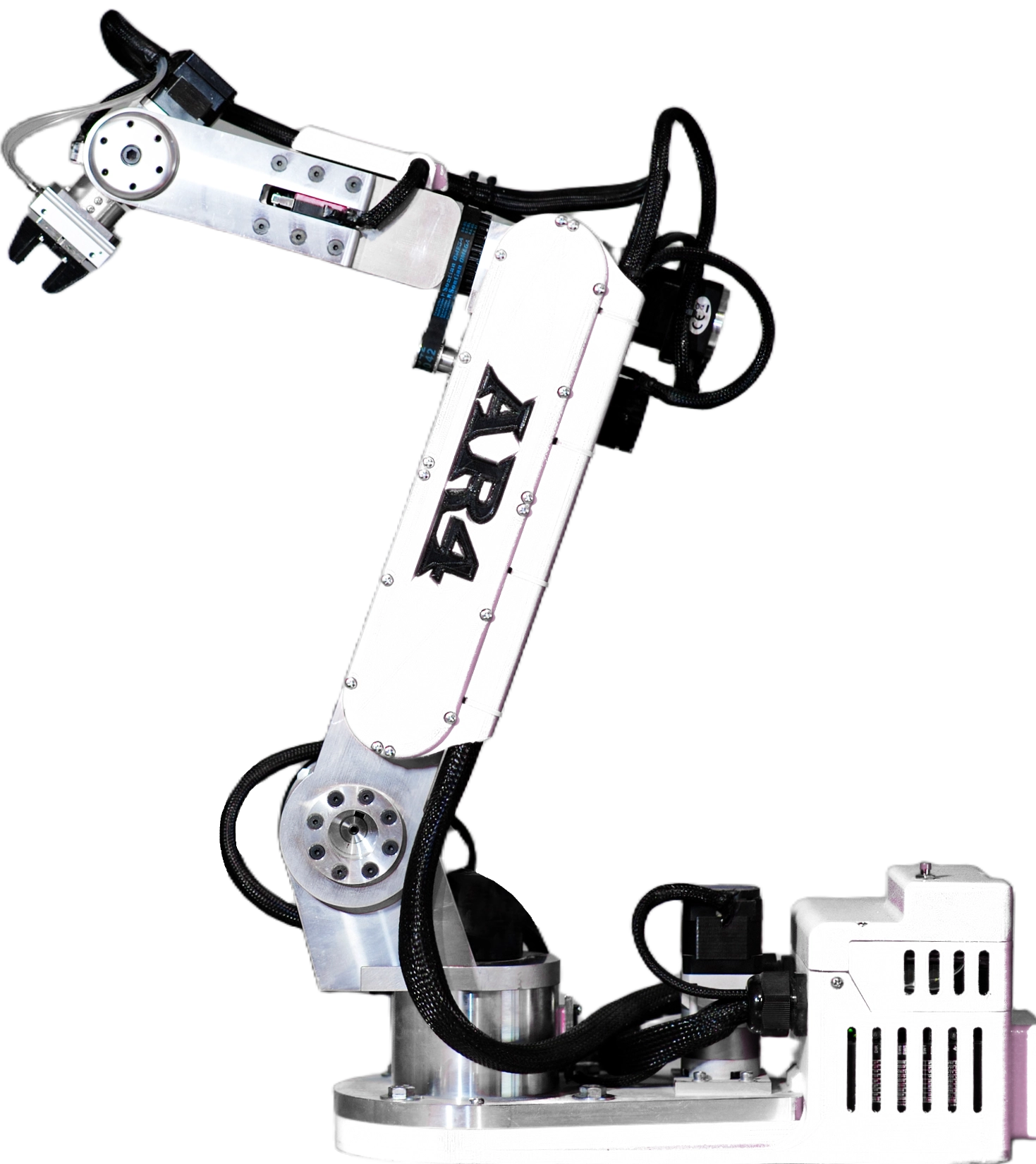
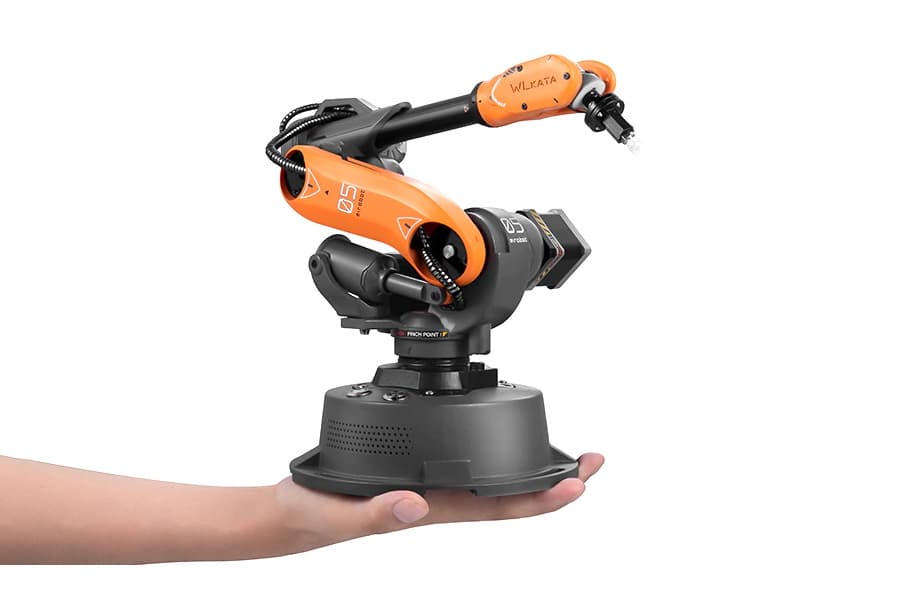
$0
AR4 combo kit with motors
$0
Mirobot Professional Kit (Oct 2026)
0 mm
AR4 reach (Mirobot: 315 mm)
0.0 kg
AR4 payload (Mirobot: 250 g)
Overview
The WLKATA Mirobot is a compact six axis arm sold mainly to schools, and it is a natural comparison for teachers pricing the AR4. Both have six axes, both accept G-code, and both target education.
Where they part ways is scale. The Mirobot is a small desktop arm with a 315 mm reach, while the AR4 is a full size benchtop arm with roughly twice the reach and several times the payload. The figures below come from WLKATA's pages and our own spec sheet.
Specs
The AR4 wins 3 rows and the Mirobot wins 3. AR4 values are from the AR4-MK5 specification sheet. Mirobot values are from WLKATA's own pages, listed under Sources. "Not published" means the maker does not list it.
| Spec | Annin AR4-MK5 | WLKATA Mirobot |
|---|---|---|
| AxesEven | 6 | 6, plus an optional seventh axis |
| ReachAR4Twice the reach | 629 mm (24.75 in) | 315 mm workspace |
| PayloadAR4More than 7 times the standard payload | 1.9 kg (4.15 lb) | 250 g standard, 400 g max near the desktop |
| RepeatabilityMirobot | 0.25 mm | 0.2 mm |
| Max speed | Max linear speed: 100 mm/s | Joint speeds 60 to 450°/s. Linear speed not published. |
| Arm weightMirobot | 12.25 kg (27 lb) | 1.5 kg |
| Drives | Closed loop stepper motors with gearboxes, encoder feedback on every joint | Stepper motors with reducers |
| MaterialsEven | 26 machined aluminum structural parts, 3D printed PETG covers | Aluminum alloy, ABS engineering plastics |
| SoftwareEven | Python HMI with digital twin, ROS 2, Modbus, G-code | WLKATA Studio, Python, G-code, Blockly, Scratch, ROS |
| Open sourceAR4 | Mechanical design, electronics, firmware, and software are all open | Open API. Hardware is not open. |
| PriceEvenWithin about $200 | Combo kit $1,229 plus $699 motor package ($1,928 total) | $1,790 Professional Kit, $1,680 Education Kit (Oct 2026) |
| AssemblyMirobot | You build it from a kit | Ships assembled with tools |
AR4 advantages
629 mm vs 315 mm.
1.9 kg vs 250 g standard.
Full CAD, wiring, and firmware, with every part sold separately.
Close to industrial arm proportions, so lessons transfer to real cells.
Mirobot advantages
0.2 mm published vs the AR4's 0.25 mm.
1.5 kg on a 160 mm base. Easy to share between classrooms.
Ready to teach on day one, tools included.
Price
WLKATA lists the Mirobot Professional Kit at $1,790 on its US store (checked October 2026), and the Education Kit at $1,680. Both include end effectors and education software.
A complete AR4-MK5 is $1,928, which is the $1,229 combo kit plus the $699 motor package. For roughly the same money, the AR4 is a much larger arm: 629 mm reach and 1.9 kg payload vs 315 mm and 250 g.
See the AR4 MK5 combo kit or browse all AR4 robot kits, including the aluminum, hardware, and electrical kits sold separately.
Prices change. Check each store before you buy.
Software
The Mirobot uses WLKATA Studio, Blockly, Scratch, Python, and G-code, with ROS and MATLAB support. Its classroom material is a real strength.
The AR4 uses a free Python HMI with a digital twin, ROS 2, Modbus, and G-code. Both arms speak G-code, but only the AR4 opens its firmware, electronics, and CAD as well.
Build and repair
The AR4 is built from 26 machined aluminum parts and closed loop stepper motors. Every component is documented and sold individually, so a classroom can keep spares and fix arms on site.
The Mirobot ships assembled with a compact body and integrated electronics, which makes setup quick. Its tighter published repeatability is a real strength for drawing and small part work. For heavier grippers, longer reach, and open hardware, the AR4 is the stronger platform.
Read the full AR4-MK5 specifications for motors, gear ratios, and joint ranges.
Bottom line
FAQ
Close. A complete AR4-MK5 is $1,928. The Mirobot Professional Kit is $1,790 and the Education Kit is $1,680 (October 2026).
The AR4, rated for 1.9 kg. The Mirobot is rated for 250 g standard and 400 g near the desktop.
The AR4 reaches 629 mm. The Mirobot workspace is 315 mm.
It has an open API, but the hardware design is not open. The AR4 is open source in hardware, electronics, firmware, and software.
For desk sized lessons with no build step, the Mirobot. For courses where students assemble a full size arm and use real payloads, the AR4.
Machined aluminum, open source from the ground up, at a price a classroom can afford.
References
Mirobot figures and price retrieved from wlkata.com on October 26, 2026. WLKATA and Mirobot are trademarks of their owner. This page is not affiliated with or endorsed by WLKATA.