
Kit guide
Aluminum Robot Arm Kit: the AR4 MK5
The AR4 is built on 26 machined aluminum parts, not printed plastic. Here is what that buys you, what comes in the aluminum kit and how it fits with the rest of the build.
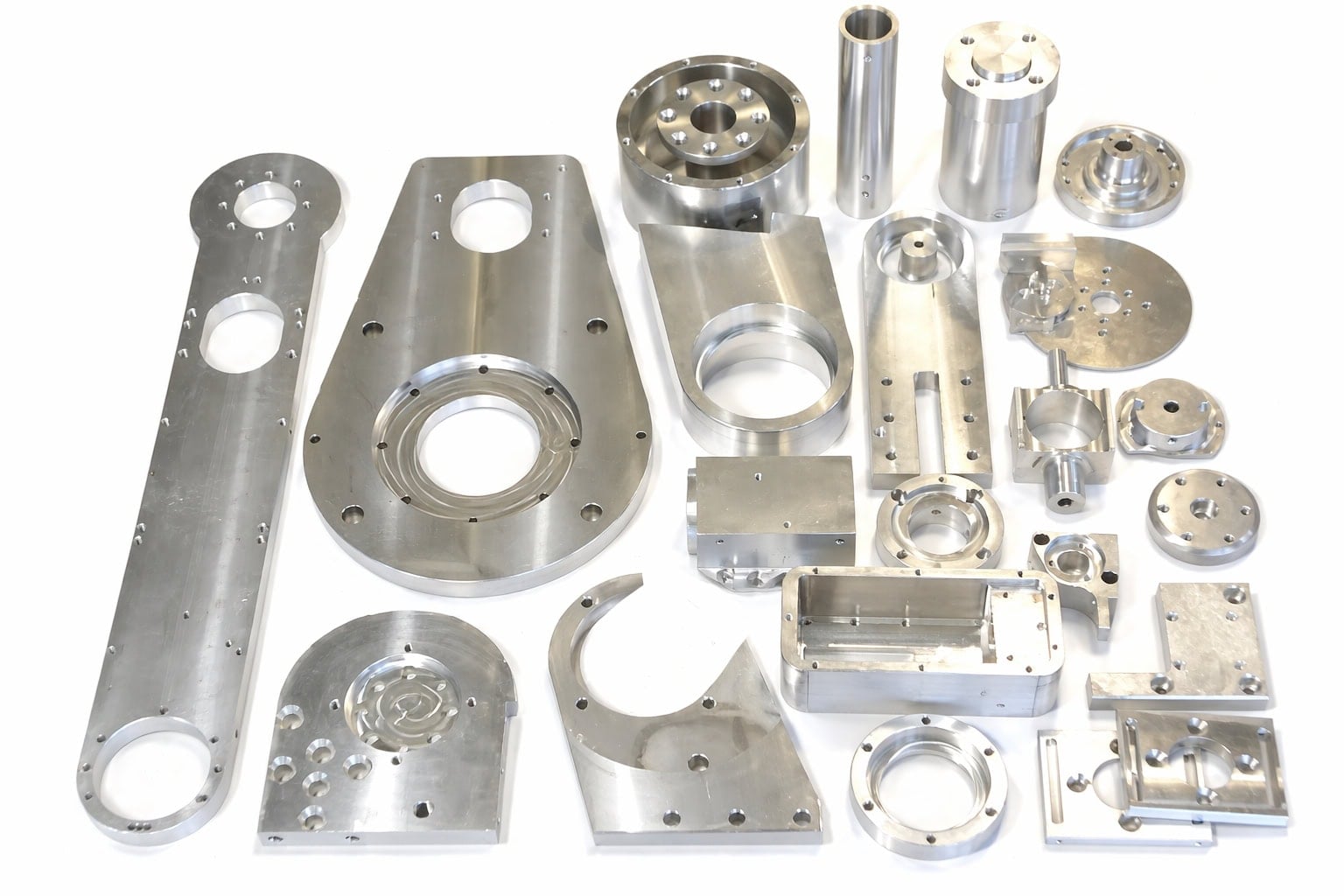
The skeleton of the arm
The aluminum parts kit holds every structural piece of the AR4 MK5: base, links, motor mounts and wrist housing, machined and ready to assemble.
Machined parts
26
Aluminum kit
$699
Payload
1.9 kg
Arm weight
12.25 kg
Why aluminum for a robot arm
Every link in an arm is a lever. Any flex in the structure shows up at the tool as lost accuracy, and it gets worse as the payload and reach grow. Machined aluminum gives the AR4 stiff links and accurate bearing seats, which is how it reaches 629 mm while carrying a rated 1.9 kg with 0.25 mm repeatability.
Stiffness
Aluminum links flex far less than printed plastic of the same size, so the arm holds its path under load.
Accurate fits
Machined bores keep bearings, shafts and pulleys aligned, which matters for belts and gearboxes.
Durability
Metal parts keep their shape over years of classroom and lab use. Covers and spacers stay printed, so color is still up to you.
How the aluminum kit fits the build
| Aluminum parts kit | $699: 26 machined aluminum structural parts |
|---|---|
| Hardware kit | $319: bearings, belts, pulleys, shafts, pins and fasteners |
| Electrical kit | $229: Teensy 4.1 path, wiring and base electronics, without motors |
| Combo kit (all three) | $1,229 |
| Motors, drivers, power supply | From StepperOnline, bought separately |
Most builders buy the combo. The aluminum kit on its own suits people who already have the hardware and electronics, are rebuilding an arm or want spare structural parts for a lab.
Aluminum vs printed robot arms
Most open source arms are mostly printed: the published materials for Thor, PAROL6, Arctos and SO-101 are printed plastics (see the open source robot arm roundup). Printed arms are cheaper and easy to change. Some small servo arms, such as the Hiwonder xArm 1S, use aluminum alloy brackets, but at a much smaller size and payload class (see AR4 vs xArm 1S).
The AR4 takes a middle road: a machined aluminum structure for stiffness, with printed PETG covers and spacers you can make on a desktop printer in any color, or buy as a set.
Repair and spares
Every AR4 part is sold separately, and the manual shows each one in place. If a part is damaged, you replace that part with hand tools rather than the arm. A lab can stock spares of the parts students handle most.
Kit plus motors
$1,928
Combo kit $1,229 + StepperOnline motor package $699. Grippers and printed covers are extra.
Keep reading
FAQ
What is in the AR4 aluminum parts kit?
26 precision machined aluminum components: the primary structural pieces of the AR4 MK5, including the base, links, motor mounts and wrist housing.
How much does the aluminum robot arm kit cost?
The AR4 MK5 aluminum parts kit is $699 on its own. The combo kit, which adds the hardware and electrical kits, is $1,229, and a complete arm with the StepperOnline motor package is $1,928.
Why is an aluminum robot arm better than a 3D printed one?
Machined aluminum links are stiffer and hold their shape and bearing fits under load and heat better than printed plastic. Printed arms cost less and are easy to modify. The AR4 uses aluminum for the structure and printed PETG for covers and spacers.
How heavy is the aluminum AR4?
The assembled AR4-MK5 weighs 12.25 kg (27 lb), so bolt or clamp the base to a sturdy bench.
Do I need to machine anything?
No. The aluminum parts arrive machined. You assemble them with the hardware kit following the build manual. Only the covers and spacers are 3D printed.